Slot 1
Every Tuesday
08:00–09:15
UK time: Tuesday, 08:00–09:15

A six-month live online training for coaches, facilitators, therapists who coach and body-based practitioners.
Learn practical ways to work with the body safely through live teaching, embodied practice, peer groups and feedback.
Next starts February 2027

“CEC had a huge impact by giving me tools that made my coaching so much more powerful.”
2000+ coaches trained
84% graduation rate

Around 6 hours/week
Three weekly call options
Coaching is not short of models, questions, scripts or advice.
AI can give you those in seconds. So can coaching books, LinkedIn posts and the like.
But what is harder to train is presence, attunement, trust and your own embodiment.
That’s what you’ll get on the Certification of Embodiment Coaching (CEC).
Learn practical techniques – with clear standard and accountability – developed through more than 15 years training coaches from over 45 countries.


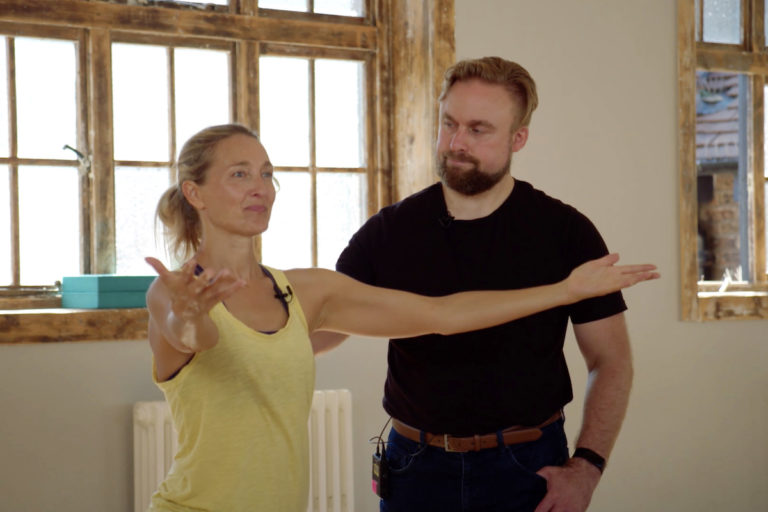
Many clients can talk endlessly about their patterns.
They can explain their family dynamics, their leadership problem, their relationship issues, their productivity issue, their childhood wound, their attachment style… Frankly, the whole bloody TED Talk.
But under stress, the body does something else.
They freeze. Collapse. Mask. People-please. Overthink. Push through. Shut down. Say yes while something in them is clearly saying no. Their embodied pattern takes over.
They are not broken or “resistant”. They just have habits – of state, posture, breath, attention and nervous-system disposition.
Talking brings insight. The body makes change usable under stress.
CEC helps coaches work with that layer safely and practically – within coaching scope, without pretending to be therapists, and without making embodiment weird for the sake of it.

When clients are stressed, collapsed, frozen or over-activated, they do not have access to the same choices.
Coaching needs to include the state they are actually in.
Habits show up in posture, breath, movement, attention, tone and relational response.
The story is only part of the pattern.
Instead of only talking about confidence, boundaries or presence, clients can rehearse them through simple embodied exercises.

You can read about embodiment and watch videos about centring.
“Shelf-help” is useful… sometimes.
But presence is trained live.
So is timing, consent and knowing what to do when something real happens in a session.
In CEC, you practise, get feedback, watch demos, work with peers and meet clear standards.
That is how the work gets into your body.
CEC is aimed at people who already work with people – coaches, facilitators, trainers, therapists who coach and body-based practitioners – and want to bring the body into that work safely.
But it also suits people who want to become coaches through an embodiment coaching certification. If you want to help others or are interested in a career change, CEC might also be a fit.
You do not need to be bendy, mystical or enlightened.
You do need to practise, be seen, get feedback and take the work seriously.
CEC is not for everyone.
You will practise with other people. You will get feedback. You will be asked to notice your own state, your habits and the effect you have in the room.
Consent matters. So does kindness and being able to hear something useful without needing it wrapped in cotton wool.
Feedback is direct and specific, but it is given in service of your learning.
You may be challenged, but you will not be shamed.
You are responsible for your state, your learning and your behaviour.
If you want to be supported and challenged, you may love it.
If you want to be constantly affirmed, rescued or protected from useful feedback, you probably won’t enjoy CEC.
We take people seriously enough to support them, challenge them and expect them to take responsibility for their learning.
It’s practical coach training for adults willing to practise, get feedback and occasionally laugh at themselves.
CEC gives you tools you practise, not ideas you collect.
You work with real coaching situations, get feedback, and learn to bring the body into client work without losing your head or your professional scope.
The work shows up in your timing, your boundaries and the choices you make in real-time under pressure.
By the end, you should be able to use simple body-based tools in coaching sessions, stay inside scope, and meet clear assessment standards.

“I have used the tools and techniques with clients to enable a deeper awareness and different choices.”

"A total game-changer for my coaching practice. It’s by far the most valuable training investment I’ve made."

“CEC has given me the power and authority to transform the lives of many Filipinos for the better!”
Unfortunately, you do not learn embodiment by thinking harder about embodiment.
CEC is live and practical. You are taught the tools, shown them in action, then asked to practise.
You get feedback. You try again.
This is how skill develops.
You try the tools in your own body first. Then you practise bringing them into coaching, facilitation and client work.
The point is skill, not information-hoarding.
You learn the models and tools, then watch how they are used with real coaching situations.
You try the work in your own body and practise with other students.
You get seen, supported and corrected so the work becomes cleaner.
You are expected to show up, practise and meet the completion requirements.
Six months gives the work time to move from interesting ideas to something you can actually do.
The detailed curriculum is below. This is the broad arc.

You start with your own embodiment.
Presence, state, centring, awareness and range. How your embodiment impacts… everyone.
Before you use this work with clients, you learn to notice what is happening in yourself, build trauma awareness and more.

You learn six core ways to work with breath, posture, movement, attention, boundaries and state.
You practise using embodiment practically in coaching without becoming “woo-woo” or vague.
You also learn the principles behind the tools, so you can adapt and create more.
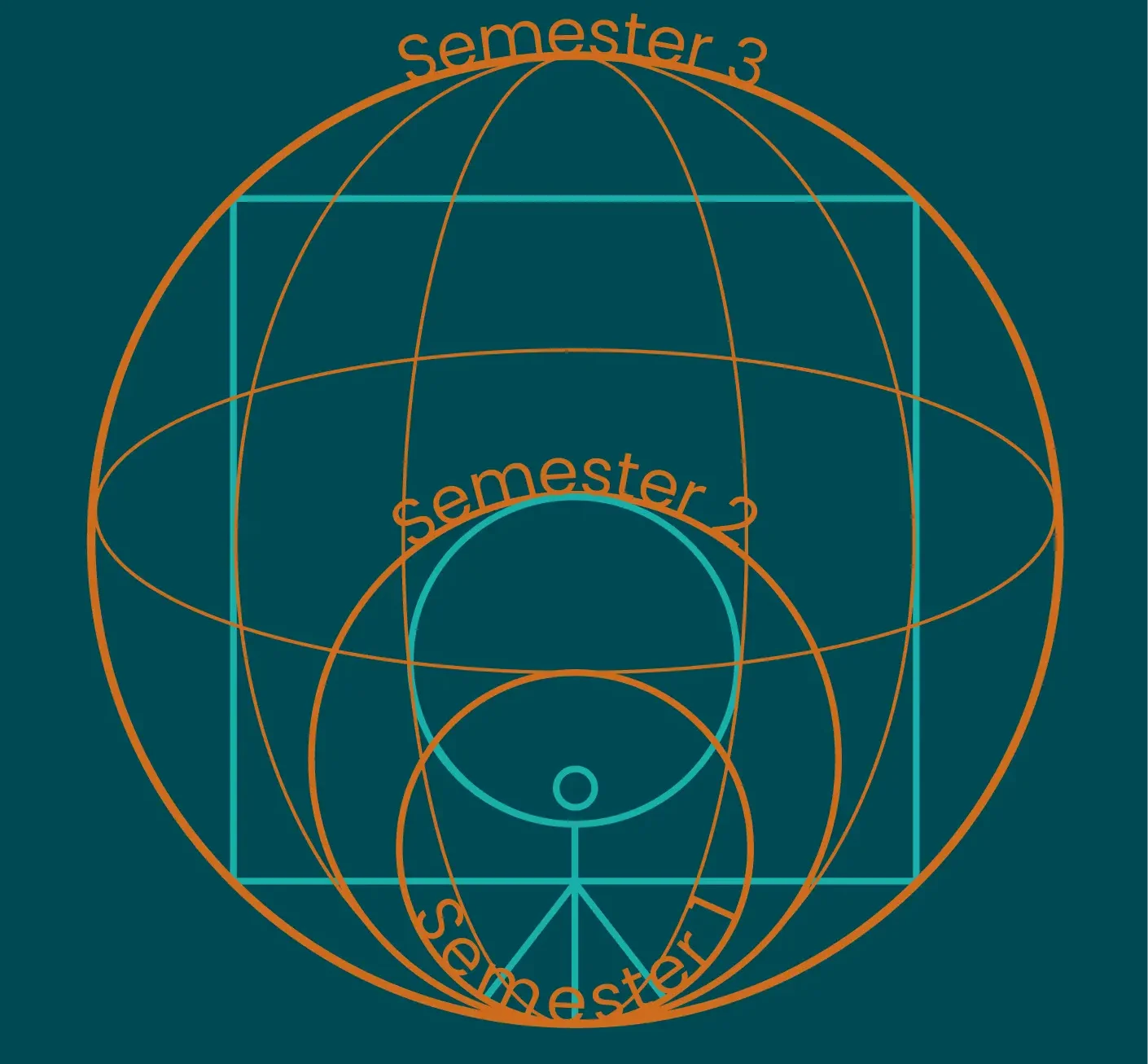
You practise with more real coaching situations, including client work as the course progresses.
You get feedback, refine your timing, clarify your scope and prepare for the exam.
You’ll also learn group work to complement the one-to-one tools, cultural adaptations, and some marketing to help you make a living.
CEC is not built as a content library you slowly avoid.
It has a weekly rhythm, peer groups, live attendance, feedback, a course management team and clear assessment standards.
That matters.
Busy adults do not usually finish training because they are magically disciplined. They finish because the structure keeps them engaged.
If you show up and do the work – attend, practise and submit the required assessments – and your coaching is not yet at certification standard, we will give you clear feedback and a straightforward route to re-assess.
You do not just get waved through.
You also do not get left guessing.
That is the point of having standards, and we have spent 20 years developing ours.

“Embodiment is an essential component of healing, and Embodiment Unlimited does valuable work bringing its importance to the public.”

“The embodied work Mark and the team do is both creative and practical.”

“Challenges to our safety make us strangers in our own body. Embodiment Unlimited provides important resources informing individuals about practices leading to an effective ‘re-embodiment’.”
Working with the body is powerful.
That is why CEC takes consent, scope and ethics seriously.
You learn to bring the body into coaching with permission, clear boundaries, attention to capacity, and respect for what is yours to work with.
CEC trains coaches.
You learn when to work, when to slow down, when to stop, and when to refer.
The body is part of the work. It needs care.
Ask. Explain. Offer choice. Respect a no.
Work as a coach. Know what belongs in coaching and what does not.
Notice when something is too much, too fast or not appropriate.
Know when the best coaching move is to send someone to the right professional.

Embodiment is relational.
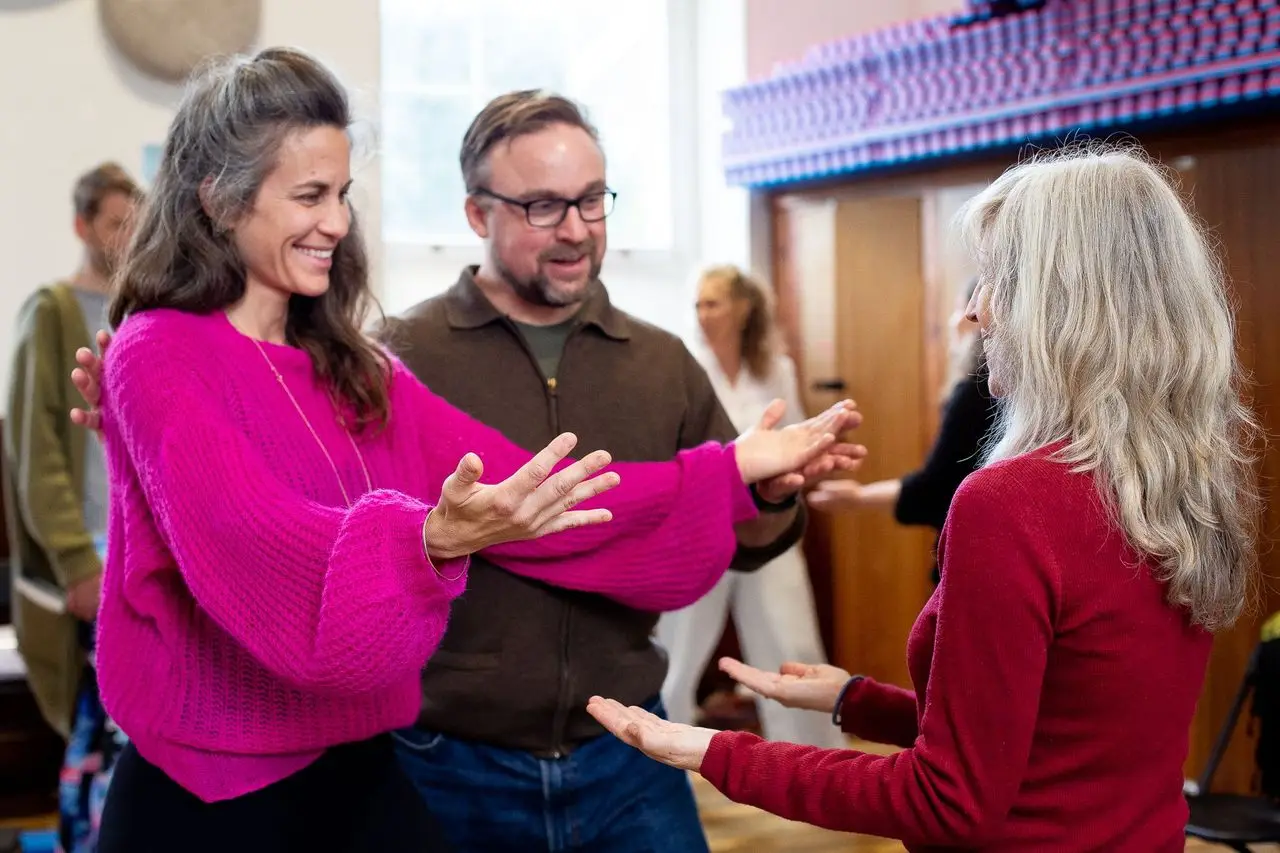
In CEC, you practise with other students, work in smaller groups, bring the tools into client practice as the training progresses, get feedback, and notice what happens in your own body when you coach, listen, lead, freeze, rush or try to be impressive.
The community is not there for vibes.
It is there because this work needs other humans.
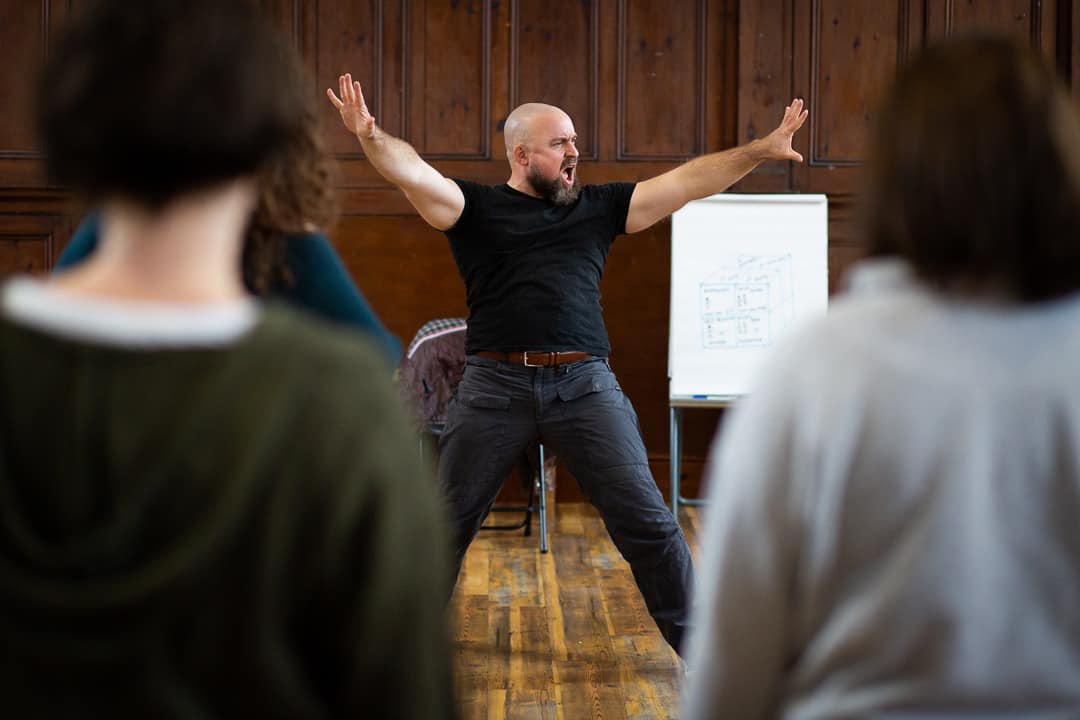
You see the work taught, demonstrated and picked apart.
You learn what the trainer noticed, why they chose a move, what they ignored, and how to keep the work clean.
This is one of the reasons CEC is live. Embodiment is easier to talk about than to do well.

See bio
Mark Walsh is the founder of Embodiment Unlimited and has spent more than 15 years training coaches, facilitators, leaders and practitioners in practical embodiment.
He is known for making embodiment useful, clear and occasionally inconvenient for people who like their personal development heavily perfumed.
His work brings together coaching, martial arts, trauma awareness, leadership training, meditation, movement and a long-running suspicion of vague spiritual waffle.


“I keep running the Certification of Embodiment Coaching because this is the work I care about most: training coaches who can actually use embodiment with people, not just talk about it.
CEC is for people who want to take this seriously – not post about embodiment, perform it, or use it as spiritual affectation.
The world needs more sane, kind, embodied people. Coaches can help with that, if they have the skills.
The training is practical, playful and sometimes challenging. We’ve done this for a while and know what works.
On CEC you will practise.
You will get feedback.
You will be asked to look at your own patterns.
Many people laugh a lot too… some don’t, but hey, what am I gonna do?
If you want something ultra-spiritual, endlessly abstract or ideologically sanitised, you may hate it.
If you want useful body-based coaching skills and can make room for the work, I hope to see you in CEC.”

Here is the practical structure that keeps you learning, practising and on track:

The full curriculum is here for people who want the detail.
Most people do not need to memorise the weeks. The point is the arc: build your own embodiment, then bring the work into coaching and facilitation.
Exact details may shift slightly. The arc stays the same.
Week 0: Pre-course work
Orientation, preparation and first practice.
Week 1: Opening
Set up the training, meet the group and begin the practice.
Week 2: Embodied learning
How adults learn embodiment, and why practice beats theory.
Week 3: Embodied awareness
Attention, sensation, body awareness and noticing what is already happening.
Week 4: Nervous system regulation
Working with centring, state, activation, settling and capacity.
Week 5: 4 Elements Model
A practical map for range, state and embodied choice.
Week 6: Embodied Toolkit
Simple body-based poses for state and practice.
Week 7: Cycles and change
Exploring individual cycles and rhythms, how change happens, and what helps shift them.
Week 8: Embodied relating
Working with connection, distance, boundaries and relationship.
Week 9: Centring challenge
Practice, repetition and making centring usable under pressure.
Week 10: Opening and ethics
Starting the professional skills phase, with scope, consent and clean practice.
Week 11: The coaching relationship
Presence, trust, listening and what happens between coach and client.
Week 12: Essential tools for coaches
Core tools for bringing the body into coaching conversations.
Week 13: Frameworks and goal setting
Useful structure without turning coaching into a form-filling exercise.
Week 14: Awareness & Choice Technique
Helping clients notice what is happening in the body, and extend that into choice over their state.
Week 15: Embodied beliefs
Working with beliefs as lived patterns, not just nice sentences in the head.
Week 16: Practice
Coached practice, feedback and cleaning up the basics.
Week 17: 4 Elements Bodystorming
Using the 4 Elements model creatively with client situations.
Week 18: Embodied Toolkit
How to use the Embodied Toolkit system with clients.
Week 19: Practice
More practice with live coaching situations and feedback.
Week 20: Leader-Follower in Coaching
Working with direction, following, influence and relational dynamics.
Week 21: Practice and Q&A
Questions, practice and fixing what is not yet working.
Week 22: Coaching Flow
A bigger map for the stages and development of coaching work.
Week 23: Group Coaching
Turning embodiment tools into useful group learning.
Week 24: Designing a Great Workshop
Using embodied methods in group coaching and facilitation.
Week 25: Creativity in Embodied Facilitation
Making the work alive, useful and your own by integrating your unique strengths.
Week 26: Self-Care for Coaches
Keeping yourself resourced, clear and useful as a practitioner.
Week 27: Graduation
Completion, certification and next steps.
The next CEC runs from February to August 2027. Dates and times in the schedule below are indications of what to expect but are for the current cohort that started on September 15.
Attend one live core training call each week, choosing the slot that works for you in any given week. You can switch between core-call slots as needed.
To certify, you must attend at least 80% of the core training calls live. A small number of sessions are specifically mandatory too: the Opening, Graduation, two assessment/feedback sessions, Trolls and Embodied Ethics. Full dates are in the FAQs.
75 minutes - choose one weekly slot
All three core slots run for 90 minutes instead of 75 on the opening and closing weeks.
Use “View upcoming dates” below for the exact time in your selected timezone.
This is around Tuesday evening in North America, or Wednesday morning in Australia.
60 minutes - choose either slot
Extra practice, support, integration and Q&A. Recordings are available.
Local times may shift briefly when countries change clocks on different dates. UK session times remain fixed.
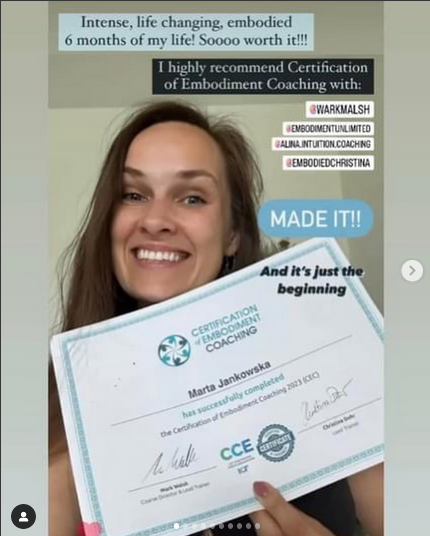
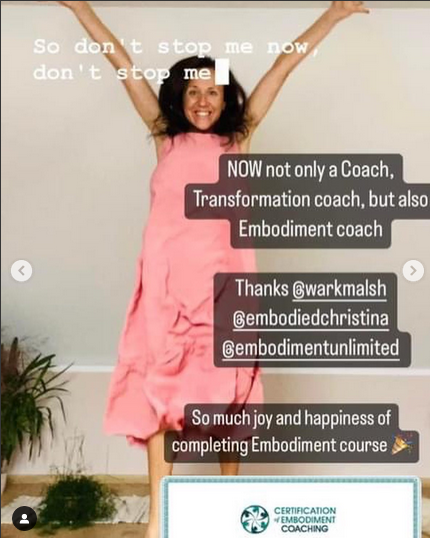
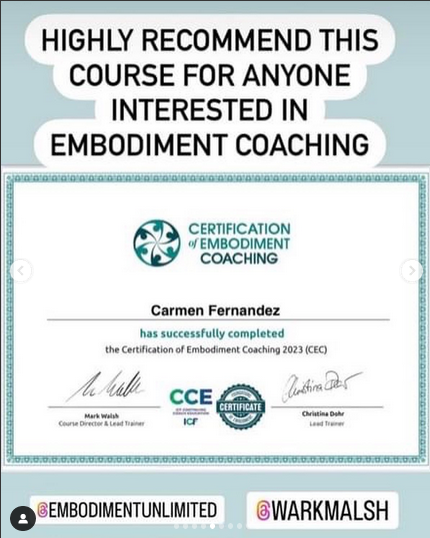
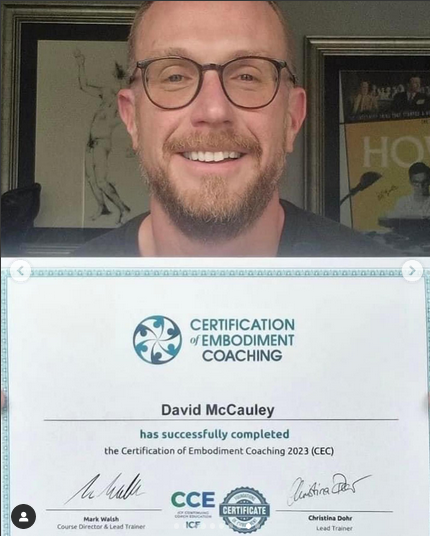
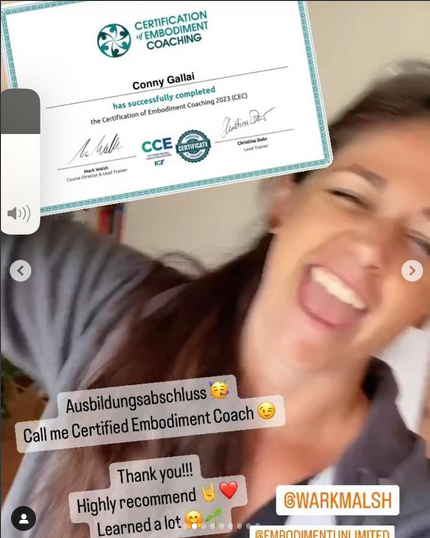
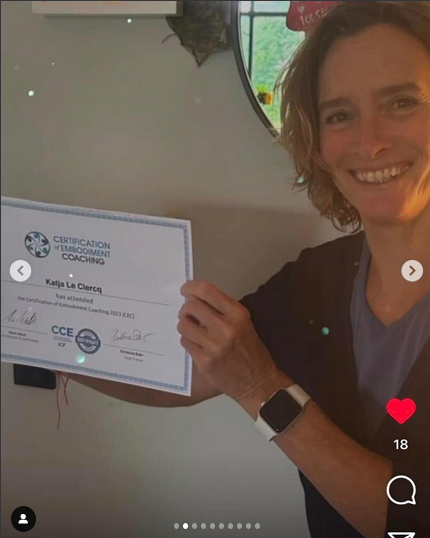
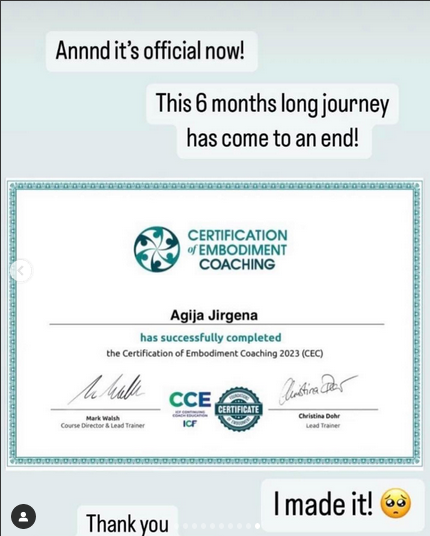
Real graduates. Real certificates. Considerable relief.
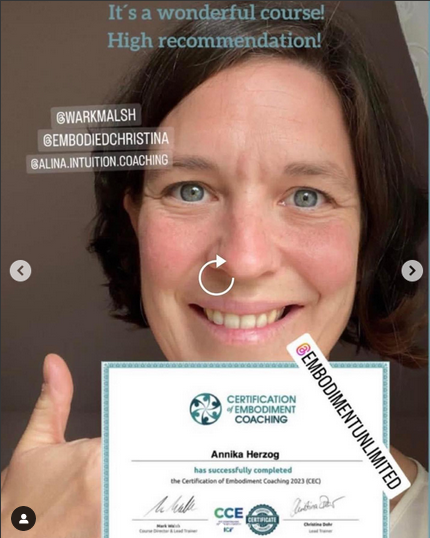
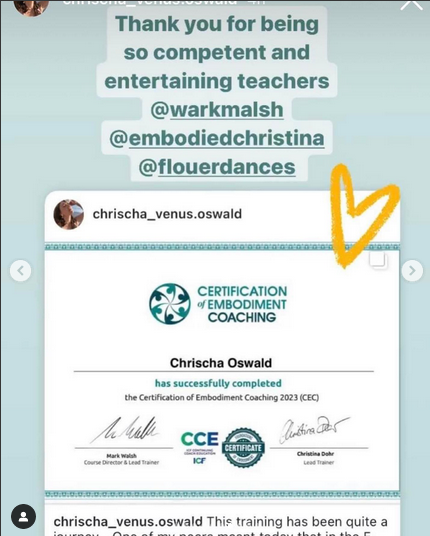
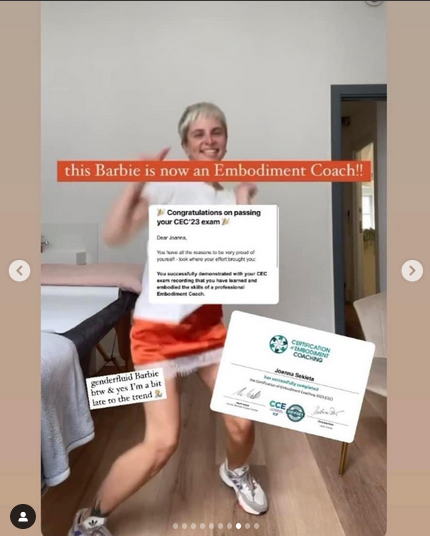
The training is the main thing. These extras help you start well, practise properly and apply the work in the real world.
(normally $500)
A private call to clarify your focus, discuss how you want to use CEC, and orient the training to your real-world context.
(normally $25)
A physical journal delivered to your door, designed to support weekly practice, reflection and integration away from screens.
(normally $150)
Practical sessions on pricing, boundaries and finding clients without being pushy or salesy.
Especially useful if you are building a private practice.
Fully attend the first live CEC session, engage, and try the training properly.
If it’s clearly not for you, email us before the second session and we’ll refund your tuition.
No awkward sales call. We’d rather have the right people on CEC.


The next Certification of Embodiment Coaching starts February 2027:
Normal tuition
$3,500
Bonkers early-bird
$1,790
Or split your payments up over six months of $350.
Not sure whether CEC fits your work?
Talk it through with Virginia on support@embodimentunlimited.com or contact here.
Embodiment coaching works with the body as part of coaching: posture, breath, movement, attention, boundaries, state and presence.
The point is to help clients notice patterns and practise new choices they can actually use under pressure.
CEC is a 6-month live online training for coaches, facilitators, trainers, therapists who coach and body-based practitioners.
You learn body-based tools, practise with other students, get feedback, and learn how to work cleanly inside coaching scope.
CEC overlaps with what many people call somatic coaching because it works with the body, state, breath, posture, attention and nervous-system patterns.
We use the word embodiment because the training is practical, relational and coaching-focused.
CEC provides 37 ICF CCE hours.
It is not ICF Level 1, Level 2 or ACTP/ACSTH training.
Check your own ICF requirements if you need the hours for credential renewal.
Ja. Ein Teil unseres Teams spricht Deutsch und unterstützt Teilnehmende aus Deutschland, Österreich und der Schweiz.
Die Live-Sessions und die wichtigsten Kursmaterialien sind auf Englisch. Bei organisatorischen Fragen und während des Lernprozesses ist jedoch deutschsprachige Unterstützung verfügbar.
Wenn du nach einer „Embodiment Coaching Ausbildung online“ oder einer „Somatic Coaching Ausbildung“ suchst: CEC ist eine sechsmonatige Live-Online-Ausbildung mit praktischen Übungen, Peer-Gruppen, klaren Assessment-Kriterien und 37 ICF CCE-Stunden.
CEC is for coaches, facilitators, trainers, therapists who coach and body-based practitioners who want to bring the body into client work safely and practically.
You do not need to be bendy, mystical or enlightened.
You do need to practise.
Not necessarily.
It helps if you already work with people in some way: coaching, facilitation, training, therapy, leadership, education, movement, meditation or similar.
CEC is professional training, not mainly personal healing or passive learning.
Yes, if you also coach or want embodiment tools that can sit clearly within coaching-style work.
CEC does not train therapy. It trains embodiment coaching.
Therapists are responsible for working within their own professional scope, ethics and regulations.
Yes, if you want to move beyond teaching practices and learn to use embodiment in coaching-style client work.
CEC can help body-based practitioners develop clearer coaching skills, consent, scope, timing and practical tools for working with people.
No.
CEC trains coaches and practitioners to use embodiment within coaching scope.
You learn consent, boundaries, pacing, capacity and referral.
The body is part of the work. It needs care.
CEC does not require touch. The training is online.
Touch may be discussed, but consent, scope and professional context come first.
For deeper work with touch and in-person practice, see the Embodiment Unlimited events calendar.
Yes. CEC is trauma-aware, not trauma therapy.
You learn to work carefully with state, capacity, pacing, consent and referral.
You do not learn to treat trauma.
If your work involves trauma treatment, stay within your professional training and legal scope.
You will be certified in Embodiment Coaching through Embodiment Unlimited, subject to completing the training requirements.
This supports you to use embodiment coaching tools within your existing professional scope.
It does not make you a therapist, doctor, physiotherapist or trauma specialist.
Most CEC sessions work through the normal attendance requirement: to certify, you need at least 80% live attendance at the core training calls and your peer group.
There are also six sessions you specifically need to attend live:
You only need to attend one live time option for each session.
The Tuesday sessions have three time options, and the mandatory Thursday sessions have two.
Most other Thursday deeper-dive sessions are highly recommended rather than required.
Yes.
Practice is central to CEC. You practise with other students, work in smaller groups and get feedback. This then expands to practising with clients.
This is not a watch-and-nod training.
Yes.
Core training calls are live and 75 minutes, with three time options (on Tuesdays or Wednesdays, depending on your timezone). Attending any one of them counts toward the 80% live attendance requirement.
Thursday calls are 60 minutes and highly recommended.
There is also a weekly peer group that has an 80% attendance requirement.
You’ll have recordings access while we host the training platform.
Live attendance still matters: you need 80% live attendance to certify, and the training is practice-based.
Plan for around 6 hours per week.
This includes live calls, pre-recorded content where relevant, practice requirements, client practice as the course progresses, and peer group work.
For those who are organised, this can be more like 5 hours, whilst some weeks may be up to 7 hours if it’s unusually busy or you’re catching up.
There are a few books we recommend (we’ll send a list). Some people source them second-hand or via a library.
Some practise experiments involve trying things in the real world. You can keep this low-cost, but you might choose to pay for an occasional class (for example, yoga or martial arts). Nothing expensive is designed into the programme.
Yes.
CEC includes assessment and clear completion standards.
The certificate is tied to completion standards, not just payment.
You get clear feedback and a route to re-assess.
You do not get waved through, and you do not get left guessing.
The bonkers early-bird price is $1,790.
Yes, you can pay in six monthly instalments.
These are available at checkout.
Yes.
If you need an invoice or supporting details for professional development funding, email support@embodimentunlimited.com
After purchase, you’ll get an email from Simplero to create your account.
You’ll also get a separate email from us with the practical training details.
A human can help you think it through.
We really do not want people joining if it is wrong for them. That is miserable for everyone.
On CEC is you practise, get feedback and build the skills to coach safely and competently in six months.
If this is your work, join the next training.